What Does Science Say About Post-Workout Smoothies?
The science behind post-workout nutrition explains why fitness facilities that offer smoothies within the recovery window see stronger member engagement. Here is what the research says and what it means for gym operators.
The post-workout recovery window is one of the most studied topics in exercise nutrition. Research consistently shows that consuming protein and carbohydrates within 30 minutes to two hours after exercise maximizes muscle protein synthesis, accelerates glycogen replenishment, and reduces muscle soreness. For fitness facilities, this creates a practical business opportunity: members who finish a workout and immediately encounter a convenient, high-quality smoothie option are far more likely to purchase than members who need to leave the building, drive somewhere, and wait in line.
The science is clear, and the market is responding. The global smoothie market is growing at 8.66 percent CAGR, and protein beverages are projected to reach $10.7 billion by 2034. Fitness centers that offer on-site recovery nutrition capture this demand at the exact moment when motivation to consume a healthy post-workout meal is highest.
The Anabolic Window: What the Research Shows
The term anabolic window refers to the period after exercise when the body is most receptive to nutrient intake for muscle repair and growth. While the scientific consensus has evolved from a narrow 30-minute window to a broader two-hour timeframe, the fundamental principle remains well-supported: post-exercise protein and carbohydrate intake enhances recovery outcomes compared to delayed consumption.
During exercise, muscle fibers sustain microtears that trigger the repair and adaptation process responsible for strength and endurance gains. This repair process requires amino acids (from protein) and energy (from carbohydrates). Consuming both macronutrients after exercise provides the raw materials the body needs to repair damaged tissue and replenish glycogen stores in the muscles and liver.
Multiple studies have demonstrated that post-workout protein intake of 20 to 40 grams stimulates muscle protein synthesis at or near its maximum rate. Consuming carbohydrates alongside protein further accelerates glycogen replenishment, particularly after endurance or high-intensity training sessions that deplete stored energy. The ideal carbohydrate-to-protein ratio for post-workout recovery is generally cited as 3:1 to 4:1 for endurance athletes and 2:1 for strength-focused training.
Why Smoothies Are an Ideal Recovery Format
Smoothies are particularly well-suited to post-workout nutrition for several reasons that go beyond convenience.
- Rapid absorption: Blended fruits and protein are easier to digest than solid meals, allowing nutrients to reach the bloodstream faster during the recovery window.
- Natural carbohydrate source: Whole fruits provide natural sugars (fructose and glucose) that replenish glycogen without the blood sugar spike associated with processed recovery drinks or candy-like energy bars.
- Micronutrient density: IQF (individually quick frozen) whole fruits retain vitamins C and E, potassium, and antioxidant compounds such as anthocyanins and polyphenols that support the body's anti-inflammatory response after exercise.
- Hydration: Smoothies made with water contribute to the rehydration process that is critical after sweating during exercise.
- Palatability: After intense exercise, many people have suppressed appetite and find it difficult to eat a full meal. A cold, fruit-based smoothie is palatable even when solid food is not.
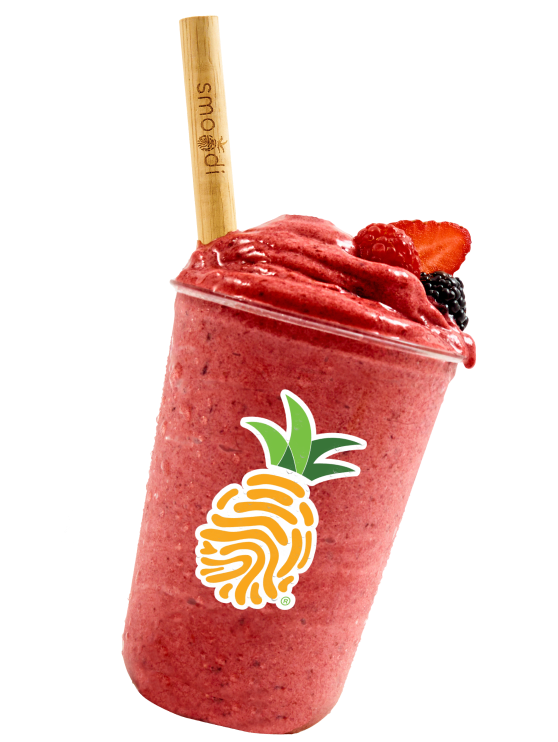
When a protein booster is added to a whole-fruit smoothie, the resulting beverage delivers the protein, carbohydrates, micronutrients, and hydration that exercise science recommends for optimal recovery, all in a single serving that takes under 60 seconds to prepare.
The Role of Whole Fruit vs. Processed Alternatives
Not all post-workout smoothies are nutritionally equivalent. The ingredient quality matters. Smoothies made from whole, IQF fruit blended with water deliver a fundamentally different nutritional profile than smoothies made from juice concentrates, purees with added sugars, or powdered mixes reconstituted with water.
IQF fruit is flash-frozen within hours of harvest at peak ripeness, preserving the vitamin content, fiber structure, and antioxidant compounds that degrade rapidly in fresh fruit sitting in cold storage. Research has shown that IQF fruit can retain up to 51 percent more vitamin C than fresh fruit that has spent 48 hours in transit and retail display. The fiber content of whole blended fruit also slows sugar absorption compared to juice-based smoothies, providing a more sustained energy release during recovery.
For fitness facilities evaluating smoothie programs, the ingredient source is a differentiator that health-conscious members notice and value. A smoothie made from whole frozen fruit and water, with an optional protein booster, is a transparent, clean-label product. A smoothie made from concentrates and syrups may taste similar but delivers a meaningfully different nutritional outcome.
What About the Protein Timing Debate?
Some recent research has questioned whether the post-workout anabolic window is as narrow as earlier studies suggested. The current scientific consensus acknowledges that total daily protein intake matters more than precise timing for long-term muscle adaptation. However, this does not diminish the practical value of post-workout smoothies for fitness facility operators. Even researchers who advocate for a broader timing perspective agree that consuming protein and carbohydrates within two hours of exercise is beneficial and that immediate post-exercise nutrition is not harmful, only that it may not be absolutely critical to consume within 30 minutes.
From a behavioral perspective, the timing question is secondary to the availability question. Members who have convenient access to a high-quality smoothie immediately after their workout are more likely to consume adequate recovery nutrition than members who plan to eat something at home but get distracted by errands, commute time, or a busy schedule. The fitness facility that provides the smoothie captures both the nutritional benefit and the revenue opportunity at the point of highest motivation.
The Business Case for Gym Smoothie Programs
Beyond the nutrition science, a smoothie station in a fitness facility addresses several business objectives that gym owners and managers care about.
Member Retention and Satisfaction
On-site nutrition is consistently cited as a top amenity in member satisfaction surveys. A smoothie station positioned near the gym exit or locker room entrance creates a visible, daily touchpoint that members associate with their workout experience. Members who purchase a smoothie after every workout develop a habit loop that ties their nutrition routine to their gym visit, increasing the perceived value of their membership.
"I have been looking to add a smoothie bar for years but did not want to deal with the labor and food waste. Having smoodi in our facility is a huge benefit for our members."
— Adam Healy, General Manager, Waverly Oaks Athletic Club
Ancillary Revenue Without Labor Costs
A traditional staffed juice bar requires dedicated employees, a prep area, inventory management for perishable ingredients, and daily cleanup. For most single-location gyms and mid-size fitness centers, the labor cost of operating a juice bar exceeds the revenue it generates. Automated smoothie stations eliminate the labor entirely. The machine blends each smoothie in under 60 seconds, self-cleans between every use, and requires approximately 40 inches of floor space. Gym operators pay lease costs plus fruit cup costs and keep the margin on each smoothie sold.
Differentiation in a Competitive Market
The fitness industry is competitive. Members have choices. A gym that offers convenient, science-backed recovery nutrition on-site differentiates itself from competitors that offer only water fountains and vending machines. For boutique fitness studios, CrossFit boxes, and specialty training facilities, a smoothie station reinforces the premium, wellness-focused brand positioning that attracts and retains their target membership.
Practical Considerations for Gym Operators
Installation is minimal: a standard 120 VAC / 7A outlet, push-to-connect water and drain fittings, and approximately 40 inches of floor space. Most gym lobbies, reception areas, and locker room corridors have the necessary utilities. Smoodi's IQF fruit cups are distributed through Dot Foods and have a shelf life of up to two years, so there is no spoilage risk from slow days or seasonal membership fluctuations. The booster bar (protein powder, collagen, and functional supplements) gives members the customization they expect.
For gyms with high peak-hour traffic (early morning, lunch, and after-work rushes), multiple machines can be installed side by side in the same footprint, blending simultaneously. Two machines together occupy roughly 80 inches of linear space while doubling throughput, so there is no bottleneck during busy periods when the most members want post-workout smoothies.
Smoodi operates in more than 300 locations across the United States (including fitness centers, universities, hospitals, and corporate offices) and has served more than two million smoothies. The operational lease starts at $299 per month (48-month term), with options at $349, $399, and $499 per month for shorter terms. A purchase option is available starting at $14,999. Smoodi was founded at Harvard Innovation Labs.
To bring science-backed recovery nutrition to your gym, visit getsmoodi.com/get-started. To estimate the revenue potential for your fitness facility, visit getsmoodi.com/roi.
Ready to bring Smoodi to your location?
Join hundreds of operators delivering fresh, automated smoothies with zero labor.
Get Started