What Food Options Work for Museums and Venues?
Museums, science centers, and cultural venues attract millions of visitors but struggle to offer healthy food beyond the cafe. Self-service stations solve the operational gap.
Museums, science centers, zoos, aquariums, botanical gardens, and cultural institutions collectively host hundreds of millions of visitors each year across the United States. These venues share a common characteristic: average dwell times of two to four hours, during which visitors are walking, standing, and engaging with exhibits. Families with children make up the largest visitor segment at most institutions, and school field trip groups create concentrated food demand at predictable intervals during the lunch hour.
Despite the volume and duration of visits, food options at most cultural venues remain limited to a single cafe or food court, often located in the lobby or basement level. Satellite food options near popular exhibits, in secondary buildings, or in outdoor garden areas are typically restricted to vending machines offering chips, candy, and bottled water. The gap between what visitors expect and what the venue provides is wide, and it directly affects the visitor experience at institutions that charge $25 to $40 per adult for admission.
Why Is Food a Persistent Challenge at Cultural Venues?
The operational constraints behind this gap are structural. Most museums and cultural institutions were designed with exhibition space as the priority, not foodservice infrastructure. Kitchen facilities are centralized and limited. Staff expertise focuses on curation, education, and guest services rather than food preparation. Daily attendance fluctuates significantly based on weather, school schedules, special exhibitions, and seasonal tourism patterns, making it difficult to staff and stock a food operation efficiently.
Many institutions outsource their food programs to contracted caterers or concession operators, which adds another layer of complexity. The contracted operator focuses on the main cafe where margins justify the labor investment, leaving secondary locations unserved. Even institutions that manage food in-house face the challenge of extending service beyond a single point of sale without adding dedicated food service staff to the payroll.
School field trips present a particularly acute challenge. Groups of 30 to 100 students arrive at the cafe during the same 30 to 45 minute lunch window, creating lines that consume a significant portion of the allotted time. Parents chaperoning these trips report frustration with limited healthy options and long waits. For the institution, this is a reputational issue: the field trip experience influences whether teachers and school districts return in future years.
Where Do Self-Service Stations Fit in Venue Operations?
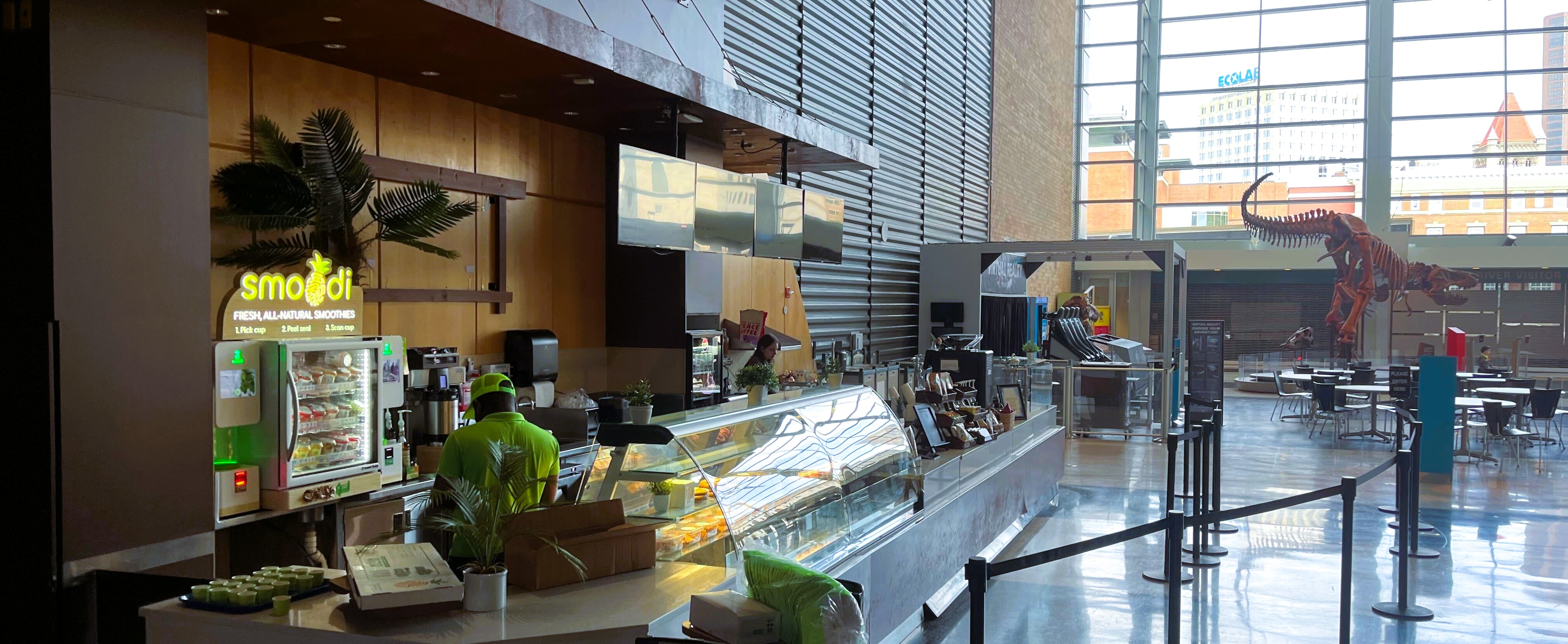
Self-service food and beverage stations address the specific constraints that make cultural venue food programs difficult. They require no dedicated food service staff, eliminating the labor barrier for satellite food locations. They occupy a compact footprint of approximately 40 inches of floor space, fitting into lobbies, near exhibit hall entrances, in outdoor courtyard areas, and in secondary buildings where full food service is impractical.
An automated smoothie station near the entrance to a popular exhibit wing or in a garden courtyard provides a healthy grab-and-go option that visitors can access in under 60 seconds. The machine self-cleans between every use, maintaining hygiene standards in environments where children are the primary audience and cleanliness expectations are high. For institutions with multiple buildings connected by outdoor walkways, a station in each building provides food access without requiring visitors to return to the main cafe.
- Main lobby and entrance hall: visitors arriving early or departing after hours of walking seek a quick refreshment
- Near high-traffic exhibit halls: science centers, dinosaur wings, and interactive galleries generate concentrated foot traffic
- Outdoor courtyards and garden areas: zoo visitors, botanical garden guests, and sculpture park attendees spend significant time outdoors
- Second-floor or satellite buildings: locations far from the main cafe where no food option currently exists
- Gift shop and exit areas: departing visitors often seek a final refreshment before leaving
How Does Variable Attendance Affect Food Planning?
Attendance variability is one of the defining challenges of cultural venue food programs. A science center might welcome 3,000 visitors on a rainy Saturday during school vacation week and 400 visitors on a sunny Tuesday in September. A zoo sees peak attendance during spring and summer and reduced traffic in winter months. Special exhibitions draw surges that can double or triple normal attendance for weeks at a time.
Traditional food programs must staff and stock for these fluctuations, absorbing waste and labor costs when actual attendance falls short of projections. IQF (individually quick frozen) fruit cups with a shelf life of up to two years eliminate the waste problem entirely. The cups remain frozen and viable whether they are used today, next month, or next season. There is no spoilage from low-attendance days, no over-ordering for projected peaks during special exhibitions, and no disposal costs at the end of a slow week.
This is particularly valuable for seasonal venues like zoos and botanical gardens, where food demand peaks in summer and declines sharply in winter. The frozen inventory model means the venue stocks a freezer once and draws from it as needed, regardless of the season.
How Does Healthy Food Align with Institutional Mission?
Museums, science centers, and cultural institutions increasingly incorporate health, nutrition, and sustainability into their educational programming. Science museums feature exhibits on human biology and nutrition. Children's museums include play kitchens and farm-to-table education zones. Zoos and botanical gardens connect visitors to the natural world and the food systems that sustain it. Offering a healthy food option that aligns with this educational mission reinforces the institution's values.
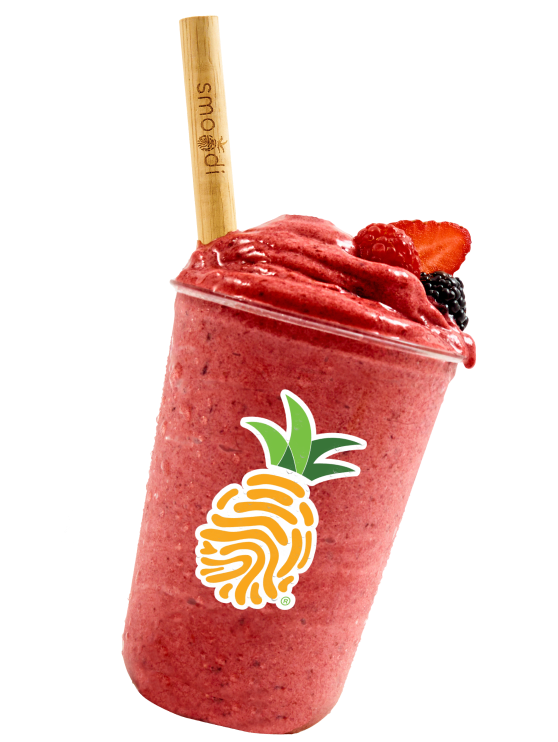
A whole-fruit smoothie, blended from IQF fruit cups with water only (no syrups, concentrates, or artificial ingredients), provides a product that the institution can feature alongside its wellness and nutrition programming. The booster bar (protein powder, collagen, and functional supplements) adds customization for parents and visitors who seek specific nutritional benefits. For families visiting with children, a fruit smoothie is a healthy alternative to the candy bars and sugary drinks that dominate most venue vending options.
What Is the Financial Model for Cultural Venues?
Smoodi's operational lease starts at $299 per month for a 48-month term, scaling to $499 per month for a 12-month term. The purchase option is $14,999. For institutions operating on tight budgets (as most nonprofit cultural venues do), the lease model provides a predictable monthly expense that can be allocated to the food service or visitor experience budget without capital expenditure or board approval for a major equipment purchase.
The revenue generated from smoothie sales is incremental to the existing food program. It does not compete with the main cafe for customers; it serves visitors in locations where the cafe has no presence. For venues with contracted food operators, the station can be positioned as a venue-managed amenity separate from the catering contract, generating revenue directly for the institution.
Smoodi operates in more than 300 locations across the United States, with over 2 million smoothies served. The company was founded at Harvard Innovation Labs, and IQF fruit cups are distributed nationally through Dot Foods. Installation requires a standard 120 VAC outlet, water connection, sanitizer inlet, and drain.
For museum directors, venue operations managers, and visitor experience teams interested in adding a healthy self-service option to their institution, visit getsmoodi.com/get-started to request a site assessment. To evaluate the financial impact, visit getsmoodi.com/roi.
Ready to bring Smoodi to your location?
Join hundreds of operators delivering fresh, automated smoothies with zero labor.
Get Started