Why Are C-Stores Becoming Healthy Food Hubs?
Convenience stores are adding fresh, healthy food programs to meet changing consumer expectations. Self-service smoothie stations fit the model perfectly.
The convenience store industry is undergoing a fundamental transformation. Once defined by packaged snacks, fountain drinks, and cigarettes, c-stores are now investing heavily in fresh food, healthy beverages, and grab-and-go options that rival quick-service restaurants. Industry data shows that 72 percent of consumers now view convenience stores as a viable alternative to fast-food restaurants, up from 56 percent just two years ago. For c-store operators, this shift represents both a competitive imperative and a revenue opportunity, but capturing it requires adding fresh, health-forward categories without the labor and complexity that traditional foodservice demands.
Automated smoothie stations are emerging as one of the most practical ways for convenience stores to add a high-margin healthy category with zero incremental labor. This article examines why the c-store landscape is changing, what operators need from a fresh food program, and how self-service smoothie technology fits the convenience store operating model.
Why Convenience Stores Are Pivoting to Healthy Food
Several forces are driving the c-store industry's shift toward healthier offerings. Consumer preferences are the most visible: younger demographics, particularly millennials and Gen Z, are more health-conscious in their daily food choices than previous generations. They still value convenience, speed, and accessibility, but they want those attributes paired with nutritional quality. A gas station that offers only hot dogs and candy bars is losing foot traffic to competitors that offer fresh wraps, protein bowls, and cold-pressed beverages.
Competitive pressure from quick-service restaurants is also driving change. Fast-casual chains have expanded into convenience-oriented formats, offering mobile ordering, drive-through pickup, and smaller footprint locations that compete directly with c-stores for the same customer visit. To defend their share of stomach, c-stores must match or exceed the food quality that fast-casual brands deliver.
Regulatory and public health trends add a third dimension. Several states and municipalities have introduced or expanded healthy food access requirements, particularly in food desert areas where convenience stores serve as primary food sources. C-store operators that proactively add healthy options position themselves favorably for these regulatory trends while serving an underserved customer need.
What C-Store Operators Need from a Fresh Food Program
Convenience stores operate on a fundamentally different model than restaurants or institutional foodservice. The typical c-store has one to three employees on shift at any given time, handling fuel transactions, register operations, tobacco sales, lottery, and store maintenance. There is no kitchen staff. There is often no dedicated food prep area. Any fresh food program must work within these constraints.
The ideal c-store food program has several characteristics. It must require zero dedicated labor, meaning the on-duty staff do not need to leave their existing duties to prepare, serve, or clean up after the food offering. It must occupy a small footprint, since c-store floor space is valuable and already allocated to high-performing categories like beverages, snacks, and tobacco. It must offer long shelf life on inputs to prevent spoilage in a variable-traffic environment. And it must deliver margins comparable to or better than the existing product mix, typically 40 to 60 percent gross margin on food items.
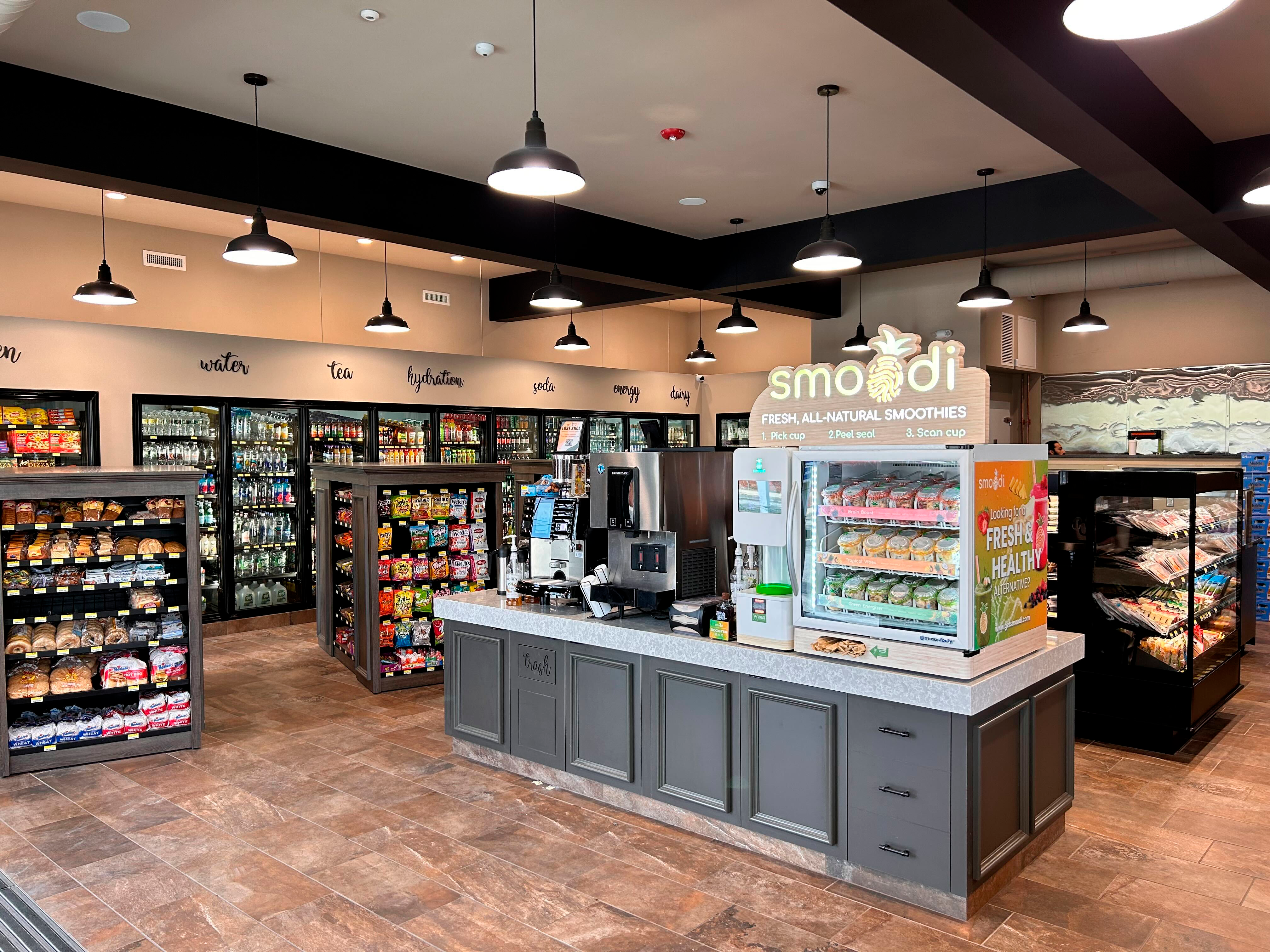
Automated smoothie stations meet every one of these criteria. Smoodi's machine requires approximately 40 inches of floor space, operates without a dedicated attendant, uses IQF frozen fruit cups with a shelf life of up to two years, and delivers per-serving margins of 60 to 70 percent at typical c-store retail pricing.
How Automated Smoothie Stations Work in C-Store Environments
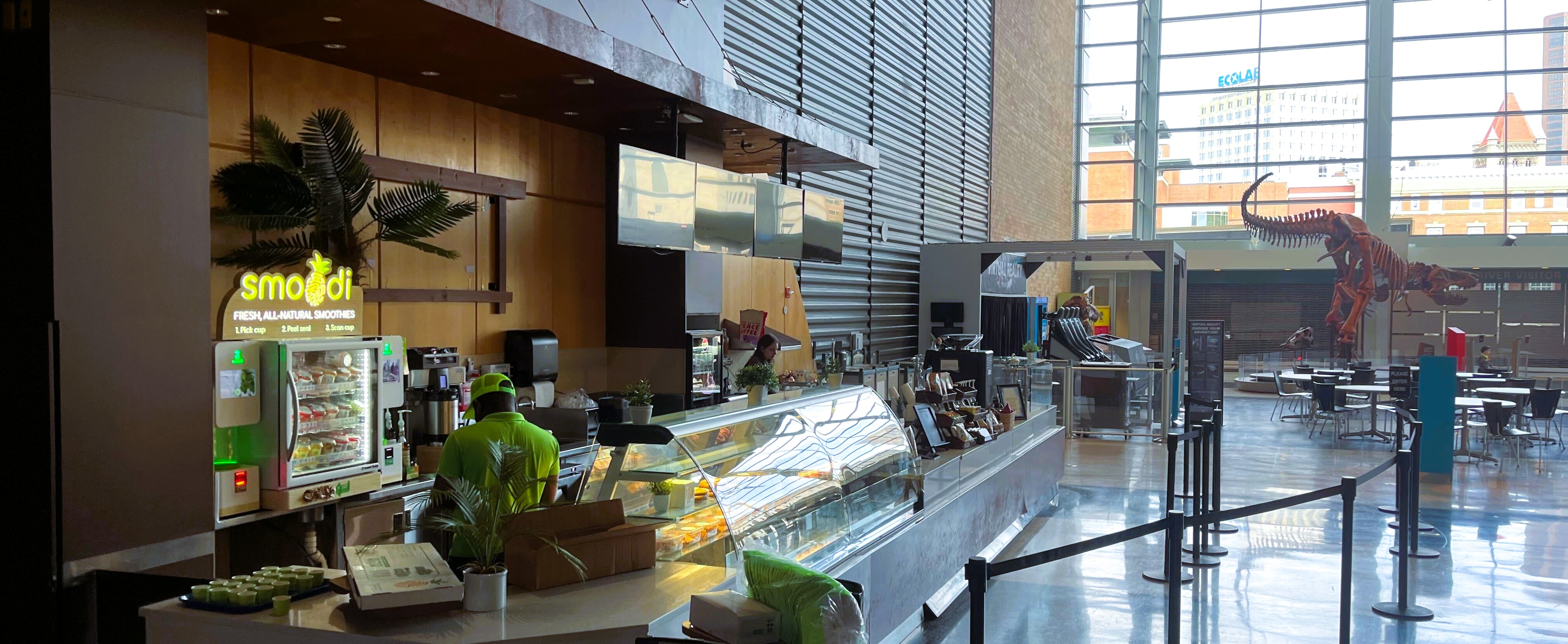
Smoodi's machine is designed for unattended, self-service operation. A customer approaches the touchscreen, selects a smoothie flavor, and receives a freshly blended smoothie in under 60 seconds. The machine self-cleans between every use. No employee involvement is needed for any step of the transaction.
The frozen fruit cups are pre-portioned and individually sealed, eliminating all food prep, portioning, and waste management. Cups are distributed through Dot Foods, one of the largest food redistribution networks in the United States, using the same delivery infrastructure that already serves many c-store operators. Restocking involves simply placing new cups in the machine's freezer compartment, a task that takes minutes and can be completed by existing store staff during routine stocking rounds.
Installation requires only standard water and drain connections using push-to-connect fittings, plus a standard 110V electrical outlet. For c-store operators, this means no major construction and minimal disruption to existing operations during deployment. A machine can be installed and operational within days of the initial conversation.
The Financial Case for C-Store Smoothie Programs
Smoodi offers operational lease programs starting at $299 per month, with full service included. A purchase option is also available starting at $14,999. On the lease, Smoodi retains ownership, handles maintenance, and supplies the frozen fruit cups. The lease structure allows operators to launch a smoothie program with predictable monthly costs instead of a large upfront equipment purchase.
At a retail price of $6.00 to $8.00 per smoothie, with a cup cost of $2.00 to $3.00, the per-serving contribution margin ranges from $3.00 to $6.00. A c-store selling 20 to 40 smoothies per day generates $40,000 to $100,000 in annual gross revenue from a single machine occupying less than four feet of floor space. On a revenue-per-square-foot basis, this performance is competitive with the highest-margin categories in a typical c-store.
The lease option is especially important for independent c-store operators and small chains that may not have the capital budget for an outright equipment purchase. With Smoodi's operational lease, operators can launch a smoothie program with a predictable monthly payment rather than a large capital outlay. The operator's primary variable cost beyond the lease is the wholesale price of the cups consumed.
Differentiating the C-Store Experience
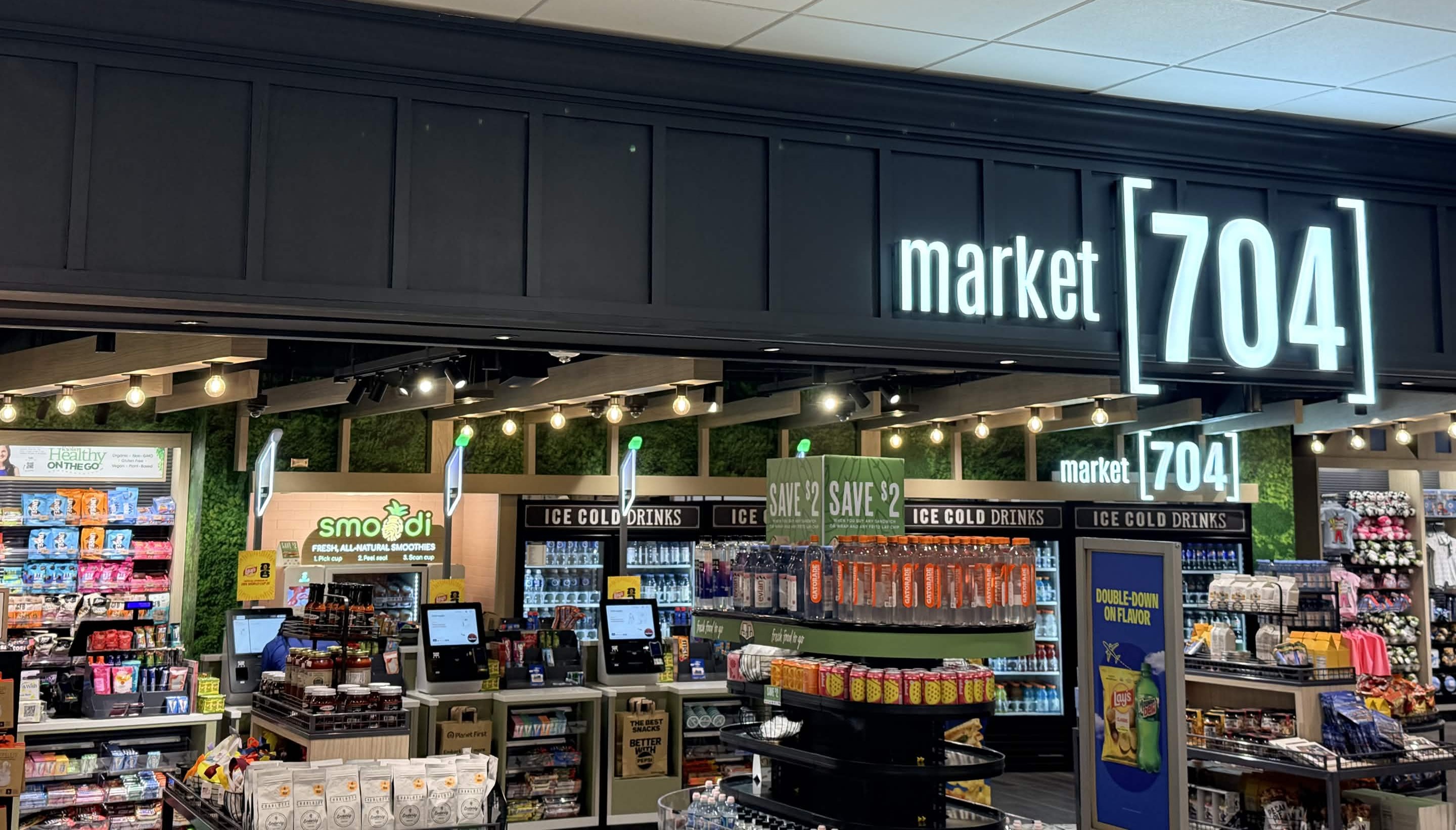
Beyond the direct revenue contribution, a smoothie station serves as a differentiation tool in an increasingly competitive convenience retail landscape. A c-store with a visible, modern smoothie machine signals to customers that this location offers more than the traditional c-store experience. It attracts health-conscious consumers who might otherwise drive past to a juice bar or fast-casual chain, and it gives existing customers a reason to increase their average transaction value.
The visual appeal of the machine and the fresh preparation process also create a positive impression that extends beyond the smoothie category. Customers who see fresh fruit being blended on demand associate that freshness with the store's overall food program, lifting perceptions of the prepared food case, the coffee station, and other fresh offerings.
Smoodi operates in more than 300 locations across the United States, including convenience stores, grocery retailers, university campuses, hospitals, corporate offices, and gyms. The company originated at Harvard Innovation Labs and has served more than two million smoothies across its network. Smoodi's IQF smoothie cups contain only whole fruit blended with water, with no syrups, concentrates, or artificial ingredients.
Getting Started with a C-Store Smoothie Program
For convenience store operators, regional chains, and fuel retailers evaluating fresh food programs, Smoodi's lease and purchase programs remove the financial, operational, and technical barriers that typically prevent new category launches. The operational lease allows operators to start with predictable monthly payments instead of a large capital outlay. No major construction is needed, and the machine requires only simple push-to-connect water and drain fittings. No staff training or scheduling is necessary. The machine integrates into existing store operations with minimal disruption.
To model the revenue potential for your store or chain, visit getsmoodi.com/roi. To begin a site assessment and placement consultation, visit getsmoodi.com/get-started.
Ready to bring Smoodi to your location?
Join hundreds of operators delivering fresh, automated smoothies with zero labor.
Get Started