Why Airports Are Adding Healthy Grab-and-Go Stations
Airports are rethinking concession programs with healthy, automated food stations that serve travelers around the clock with zero staffing requirements.
Air travel in the United States reached record levels in 2025, with TSA screening more than 900 million passengers during the calendar year. As airports handle higher volumes with tighter labor markets, concession operators are rethinking how they deliver food and beverage options to travelers. The result is a growing shift toward healthy, automated, self-service stations that serve fresh food around the clock without the staffing burden of a traditional restaurant or cafe.
This shift matters for airport concession operators, terminal management companies, and food and beverage directors evaluating new concepts for airside and landside locations. Healthy grab-and-go stations address three challenges simultaneously: traveler demand for nutritious options, the operational reality of 18- to 24-hour service windows, and the persistent difficulty of staffing airport food outlets in a competitive labor market.
Traveler Demand for Healthy Airport Food
The profile of the modern air traveler has shifted. Business travelers, families, and frequent flyers increasingly prioritize health and wellness in their daily routines, and that expectation does not pause at the airport terminal. Industry surveys show that more than 60 percent of travelers report dissatisfaction with the nutritional quality of airport food options, citing limited access to fresh fruit, vegetables, and high-protein meals.
This gap represents both a service problem and a revenue opportunity. Travelers who cannot find a healthy option often default to bottled water or packaged snacks from a convenience kiosk, spending $3 to $5 instead of the $8 to $12 they would willingly pay for a fresh, nutritious meal or beverage. Airport concession programs that add a visible healthy option capture spending that would otherwise go unrealized.
Smoothies are among the most in-demand healthy food categories in travel and hospitality settings. They are perceived as fresh, convenient, and nutritious. They appeal to a wide demographic range, from business travelers seeking a quick protein-rich breakfast before an early flight to families looking for a healthier alternative to fast food during a layover.
The Staffing Challenge in Airport Foodservice
Airport food and beverage outlets face a uniquely difficult labor environment. Positions require security clearances and badging, which adds weeks to the hiring process. Shifts are long and irregular, often starting at 4:00 AM or ending past midnight to accommodate early morning departures and late-night arrivals. And airports compete for the same hourly workforce as surrounding restaurants, hotels, and retail employers, often at a geographic disadvantage since many airports are located far from residential areas, increasing commute times for workers.
The result is chronic understaffing. Airport concession operators routinely report that labor constraints force them to reduce operating hours, close outlets during off-peak periods, or limit menu offerings. A restaurant concept designed to operate from 5:00 AM to 10:00 PM may only staff effectively for the 7:00 AM to 3:00 PM window, leaving early morning and evening travelers with minimal choices.
Automated food stations eliminate the staffing variable entirely. A self-service machine requires no dedicated attendant, no shift scheduling, and no badging process. It operates continuously, serving travelers at 5:00 AM or 11:00 PM with the same speed and consistency.
How Automated Smoothie Stations Fit Airport Operations
Smoodi's automated smoothie machines are designed for high-traffic, self-service environments where speed, consistency, and minimal footprint matter. The machine blends a fresh smoothie in under 60 seconds using pre-portioned IQF (individually quick frozen) fruit cups and water. It self-cleans between every use. The unit requires only standard water and drain connections (push-to-connect fittings) and a standard electrical outlet.
For airport operators, these specifications translate into practical advantages. The machine requires approximately 40 inches of floor space, making it suitable for placement in gate areas, near security checkpoints, in airline lounges, or adjacent to existing food court locations. Its compact footprint means it can occupy space that would not support a staffed outlet.
The IQF fruit cups have a shelf life of up to two years and are distributed through Dot Foods, one of the largest food redistribution networks in the United States. This long shelf life is particularly valuable in airport settings, where demand can fluctuate significantly based on season, day of the week, and even weather-related cancellations. Cups not used during a slow travel week remain perfectly viable for months, eliminating the spoilage risk that makes fresh-fruit programs impractical in variable-demand environments.
Revenue Potential for Airport Concessions
Airport travelers are accustomed to premium pricing. A smoothie priced at $8.00 to $10.00 in an airport terminal is consistent with existing beverage pricing and represents strong value compared to bottled juice or coffee alternatives in the same price range. At those price points, with cup costs of $2.00 to $3.00 per serving, contribution margins of 65 to 75 percent are achievable.
Smoodi offers both lease and purchase options to fit different budgets. The operational lease starts at $299 per month and includes full service coverage, with Smoodi retaining ownership and handling all maintenance and repairs. A purchase option is also available starting at $14,999. In both cases, Smoodi supplies the frozen fruit cups and provides ongoing support. On the lease program, there is no equipment to depreciate, no capital approval to seek, and no maintenance staff to hire or train.
A single machine placed in a high-traffic gate area or food court can serve 50 to 100 smoothies per day, translating to $150,000 to $350,000 in annual gross revenue depending on location and traffic volume. For concession operators managing multiple terminals or airport locations, a fleet of machines creates a scalable revenue stream with near-zero incremental labor cost.
Placement Strategies for Airport Terminals
The most effective placement locations within an airport depend on the terminal layout and traveler flow patterns.
- Post-security gate areas: travelers who have passed through TSA and are waiting to board have time, appetite, and willingness to spend on food and beverage
- Near fitness centers or airline lounges: premium travelers seeking healthy options before or after flights
- Baggage claim and arrivals: arriving passengers looking for a quick, fresh option before ground transportation
- Food courts and concourse corridors: high-visibility locations where the machine benefits from foot traffic alongside established restaurants
- Pre-security landside lobbies: early arrivals and meeters-and-greeters who have not yet passed through security
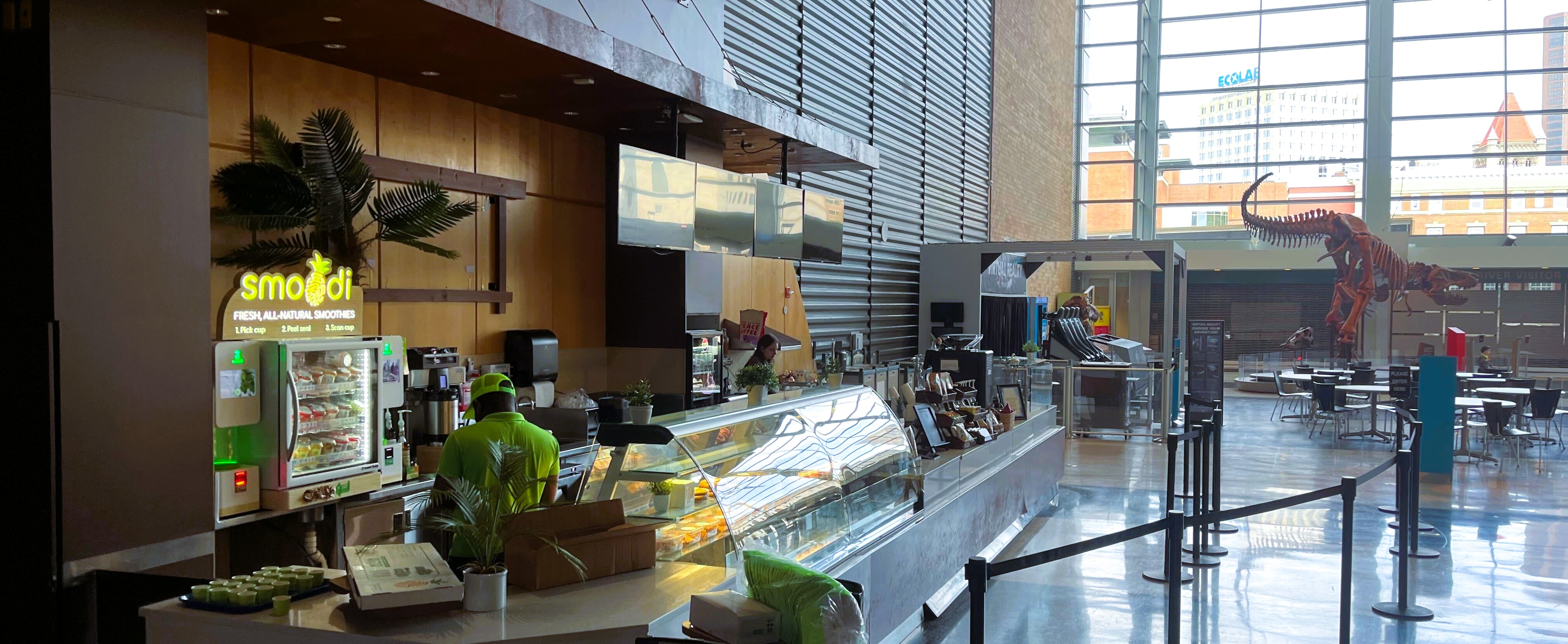
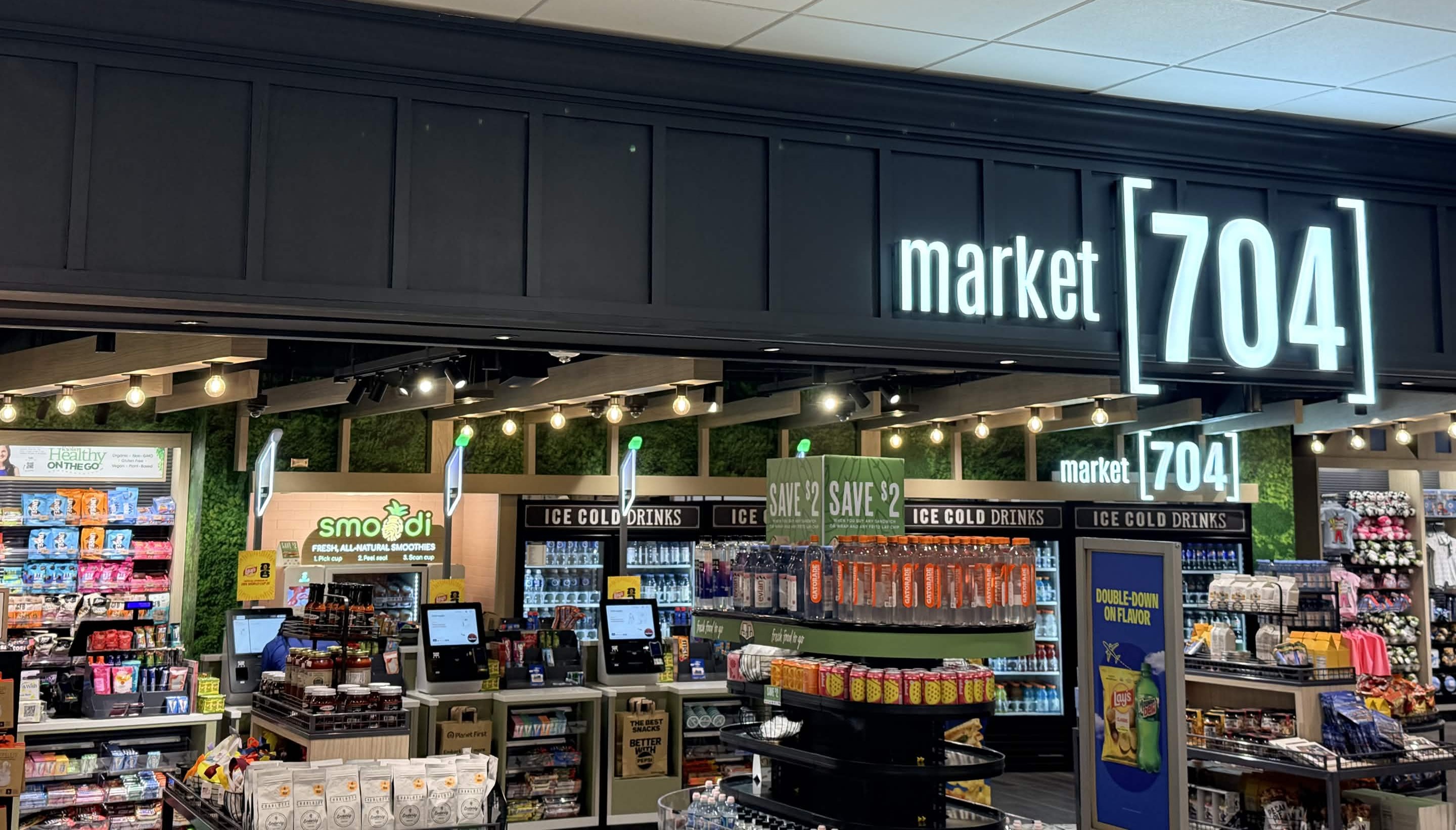
Smoodi operates in more than 300 locations across the United States, including airports, university campuses, hospitals, corporate offices, gyms, and entertainment venues. The company originated at Harvard Innovation Labs and has served more than two million smoothies across its network.
"We were looking for quick, healthy options for our customers and smoodi ticked all the boxes. It's quick, self-service, and does the job. The feedback has been great - the lines say it all."
— Jim Launer, President, Spooky Nook Sports
Getting Started with Airport Smoothie Programs
For airport concession operators, terminal management companies, and airline lounge operators evaluating healthy food concepts, Smoodi's model removes the barriers that typically prevent new food programs from launching in airport environments. No major construction is needed. The machine requires only simple water and drain connections (push-to-connect fittings) rather than specialized utilities. No staff training or scheduling is necessary. The machine can be delivered, installed, and operational within days.
To estimate the revenue potential for your airport location, visit getsmoodi.com/roi. To begin a placement consultation for your terminal or concourse, visit getsmoodi.com/get-started.
Ready to bring Smoodi to your location?
Join hundreds of operators delivering fresh, automated smoothies with zero labor.
Get Started