What Beverages Meet CACFP Standards for Childcare?
The 2025-2030 Dietary Guidelines impose strict sugar limits on beverages served in CACFP childcare programs. Whole-fruit smoothies made from IQF frozen fruit and water meet these standards by default, offering a practical path to compliance.
The Child and Adult Care Food Program (CACFP) feeds approximately 4.4 million children every day across daycare centers, family childcare homes, and adult care facilities. With the release of the 2025-2030 Dietary Guidelines for Americans, the nutritional requirements for beverages served in these programs have become significantly stricter. Childcare operators now face a pressing question: which beverages actually comply with the new standards while still appealing to young children?
The answer increasingly points toward whole-fruit smoothies, specifically those made from frozen fruit blended with water and nothing else. This approach eliminates the added sugars, syrups, and concentrates that disqualify most commercial beverage options from CACFP meal service.
What Do the New CACFP Nutrition Standards Require?
The updated CACFP standards align with the 2025-2030 Dietary Guidelines, which mandate zero added sugars for children under age four and no more than 10 grams of added sugar per meal for older children. These limits apply to every component of a reimbursable meal, including beverages. The guidelines also require greater variety of fruit servings, more whole grains, and low-fat options while minimizing saturated fat across all meal patterns.
For beverage service, this creates a narrow window of compliance. Water and unflavored milk remain the simplest options, but childcare providers who want to offer fruit-based beverages must navigate a complex set of restrictions. The USDA allows smoothies to credit toward fruit and vegetable requirements in CACFP, but only when those smoothies contain real fruit without disqualifying additives.
Smoodi has published a detailed breakdown of the updated USDA dietary guidelines and how they affect foodservice operations. Operators looking for a comprehensive overview can visit getsmoodi.com/blog for that resource.
Why Do Most Commercial Beverages Fail CACFP Compliance?
The majority of commercially available beverage options marketed to children exceed the new sugar limits. Flavored milk, juice boxes, sweetened yogurt drinks, and fruit-flavored waters frequently contain added sugars, high-fructose corn syrup, or fruit juice concentrates that push them beyond the 10-gram threshold. For programs serving children under four, even small amounts of added sugar disqualify a beverage entirely.
- Flavored milk: most varieties contain 12 to 15 grams of added sugar per serving
- Juice boxes: many use fruit juice concentrates that count as added sugars under the new guidelines
- Sweetened yogurt drinks: typically contain 10 to 20 grams of added sugar per bottle
- Fruit-flavored waters: often include sucralose, stevia, or cane sugar that disqualify them
- Smoothie mixes from concentrate: syrups and concentrates add sugar that violates the zero-added-sugar rule for children under four
This leaves childcare operators in a difficult position. Children benefit from fruit consumption, and smoothies represent one of the most effective ways to increase fruit intake. But the preparation method and ingredient sourcing determine whether a smoothie qualifies for CACFP reimbursement or not.
How Do Whole-Fruit Smoothies Meet CACFP Standards?
Whole-fruit smoothies made from individually quick frozen (IQF) fruit blended with water contain zero added sugars, zero syrups, zero concentrates, and zero artificial ingredients. The only sugars present are the naturally occurring sugars found in the fruit itself, which the USDA does not count toward added sugar limits. This means a smoothie made from frozen strawberries, mangoes, or blueberries blended with water meets the zero-added-sugar requirement for children under four and stays well within the 10-gram limit for older children.
Under CACFP meal patterns, these smoothies also credit toward fruit and vegetable requirements. A single serving can count as a fruit component in breakfast, lunch, supper, or snack meal patterns, helping childcare providers meet the increased variety requirements without adding complexity to their food preparation processes.
Research consistently shows that American children do not consume enough fruit. Smoodi's coverage of the American fruit gap (available at getsmoodi.com/blog) highlights the scale of this nutritional shortfall and why accessible, whole-fruit options matter for programs serving young children.
What Food Safety Concerns Should Childcare Programs Address?
Childcare facilities operate under heightened food safety scrutiny because they serve vulnerable populations. Young children face greater risk from foodborne illness, and licensing agencies closely monitor food handling practices. Any beverage program must address cross-contamination, allergen management, and staff training requirements.
Traditional smoothie preparation introduces several risk points. Staff members handle raw ingredients, cutting boards and blenders require thorough cleaning between uses, and open containers of fruit can harbor bacteria if not stored properly. For childcare facilities with limited kitchen staff and competing demands on their time, maintaining consistent food safety protocols around smoothie preparation can prove challenging.
Pre-portioned, individually sealed fruit cups eliminate many of these concerns. When each serving arrives factory-sealed with no staff handling of raw ingredients, the risk of cross-contamination drops significantly. Combined with automated equipment that self-cleans between every use, this approach brings smoothie service in line with the strict food safety expectations of childcare licensing agencies.
How Does Automated Smoothie Service Work in Childcare Settings?
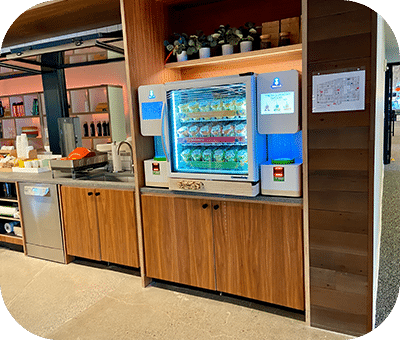
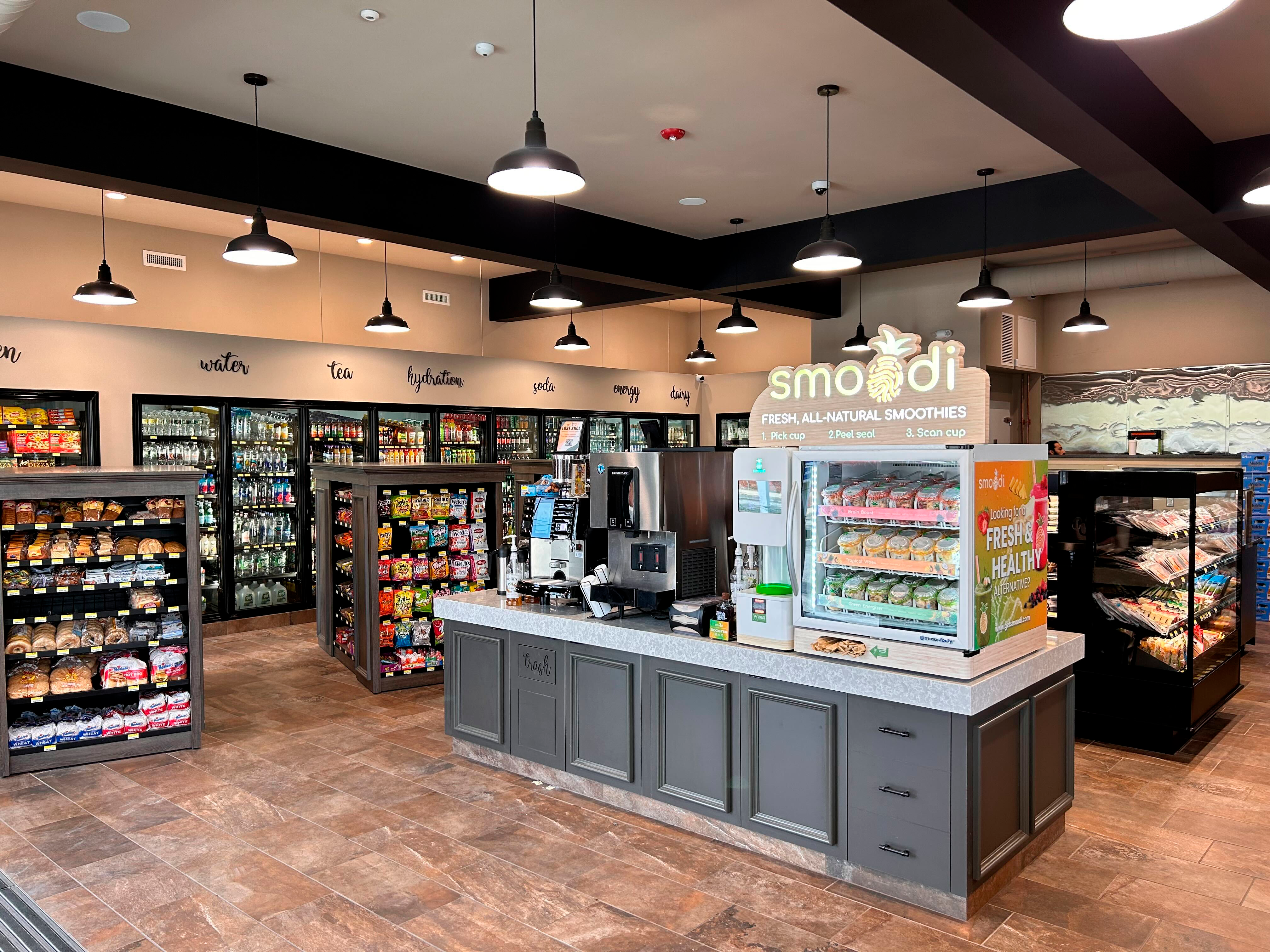
Smoodi's automated smoothie machines blend IQF fruit cups with water only, producing a whole-fruit smoothie in under 60 seconds. The machine self-cleans between every use, removing the cross-contamination risk that concerns childcare regulators. Each fruit cup is individually sealed and pre-portioned, so staff members never handle raw ingredients directly.
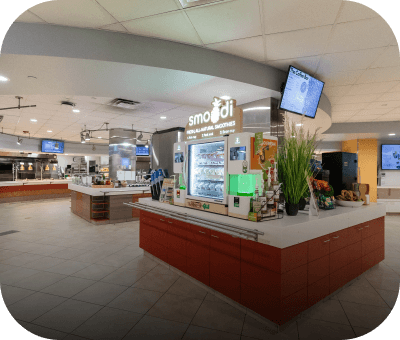
The compact footprint, approximately 40 inches of floor space, makes installation practical even in smaller childcare kitchens and serving areas. The machine requires a standard 120 VAC outlet, a water inlet, a sanitizer inlet, and a drain connection. For programs that serve meals in multiple rooms or buildings, the small footprint allows placement close to the point of service.
Smoodi's fruit cups carry a shelf life of up to two years, which simplifies inventory management for childcare programs that may not have frequent delivery schedules. Distribution through Dot Foods provides access to a national logistics network that already serves many institutional foodservice operations.
With over 300 locations and more than 2 million smoothies served, Smoodi's platform has demonstrated reliability at institutional scale. The booster bar offers optional add-ons like protein powder, collagen, and other functional supplements, though childcare programs focused on CACFP compliance may choose to serve smoothies without boosters to maintain the simplest possible ingredient profile.
"Landing with smoodi was partly because it was a smooth and barrier free process where we really felt confident in the product."
— Raphaella Prange, VP of Student Life, Maryville University
What Does CACFP-Compliant Beverage Service Cost?
Childcare programs operate on tight budgets, and CACFP reimbursement rates must cover the cost of meals and beverages. Any new beverage option needs to fit within existing per-meal cost structures while delivering measurable nutritional value.
Smoodi offers an operational lease starting at $299 per month for a 48-month term, with shorter terms available up to $499 per month. Programs that prefer to own equipment outright can purchase a machine starting at $14,999. The lease model includes full service, which removes maintenance costs from the program's budget and keeps the total cost predictable from month to month.
When calculated against the CACFP reimbursement for fruit components and the reduction in food waste from pre-portioned servings, automated smoothie service often proves cost-competitive with traditional fruit service. Pre-portioned cups eliminate the spoilage that occurs with fresh fruit purchases, and the two-year shelf life means programs can buy in volume without concern about expiration.
How Can Programs Document CACFP Compliance?
CACFP sponsors and state agencies require documentation that meals meet nutritional standards. For smoothie service, this means maintaining records of ingredients, portion sizes, and crediting toward meal pattern requirements. Whole-fruit smoothies made with a single, verifiable ingredient list simplify this documentation process considerably.
Each Smoodi fruit cup carries a complete ingredient label and nutritional information. Because the cups contain only IQF fruit with no added ingredients, the documentation trail remains straightforward. Programs can maintain a master file of cup nutrition labels and reference them for each meal service, reducing the administrative burden of CACFP compliance reporting.
Programs serving school-age children in before-and-after-school care may also benefit from reviewing how K-12 school nutrition programs have integrated whole-fruit smoothies into their meal patterns. Smoodi's analysis of smoothie programs in K-12 schools is available at getsmoodi.com/blog.
What Steps Should Programs Take to Get Started?
Childcare programs considering whole-fruit smoothie service should begin by reviewing their current beverage offerings against the 2025-2030 Dietary Guidelines sugar limits. Many programs will find that existing options no longer meet compliance requirements, creating both an operational gap and an opportunity to improve the nutritional quality of meals served.
- Audit current beverage ingredients against the zero-added-sugar rule for children under four
- Identify meal patterns where a fruit component is needed or underserved
- Evaluate kitchen space and utility connections for automated equipment installation
- Review CACFP crediting guidelines for smoothies as a fruit component
- Contact Smoodi for a childcare program consultation at getsmoodi.com/get-started
The shift toward stricter sugar limits in CACFP is not a temporary trend. It reflects a sustained federal commitment to reducing childhood sugar consumption, and the standards will likely continue tightening in future guideline cycles. Programs that invest in compliant beverage solutions now position themselves ahead of future regulatory changes while delivering genuine nutritional benefits to the children they serve.
Smoodi's team works directly with childcare programs to assess feasibility, plan installation, and ensure compliance documentation is in place before the first smoothie is served. Visit getsmoodi.com/get-started to schedule a consultation and learn how whole-fruit smoothie service can support CACFP compliance at your facility.
Ready to bring Smoodi to your location?
Join hundreds of operators delivering fresh, automated smoothies with zero labor.
Get Started